Nitipat Ong Pholchai
Thailand
泰 国
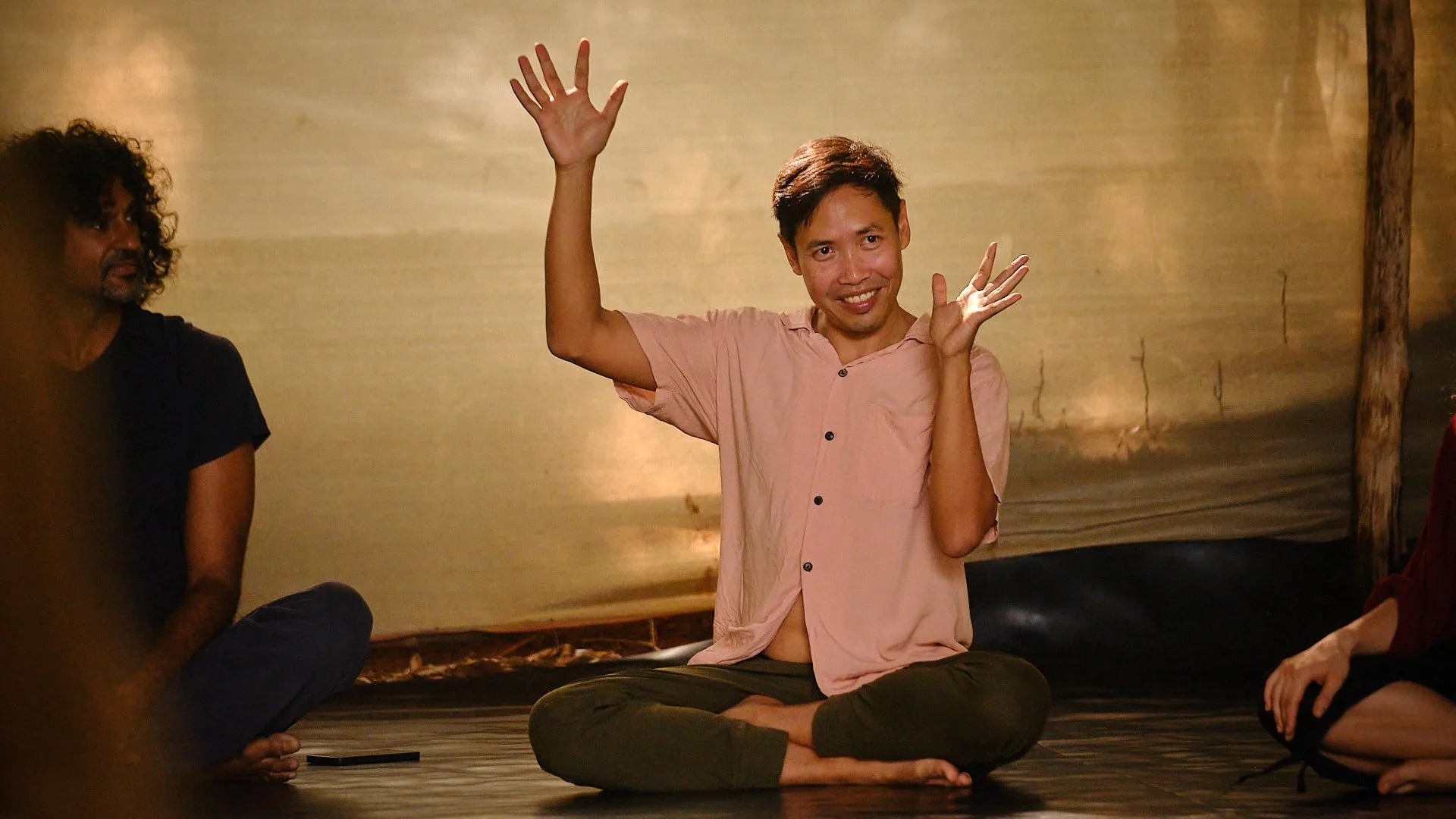
Nitipat “Ong” Pholchai is a Thai improvisation artist, somatic educator, Director of Spine Party Movement, and Founder of Conscious Movement Collective BKK.
Interdisciplinary Trajectory With a dual background in Physics and Dance, Ong’s practice explores the intersections of embodiment, inclusive design, and social justice. He treats sensory difference not as a limitation, but as Creative Intelligence.
Collaborative Highlights
Blind Rituals: Researching creative-spiritual access with blind practitioners.
Queer Uncles: Exploring generational narratives in the LGBTQ+ community.
Decolonizing Access: Regional residencies across China, Vietnam, and Korea, reimagining choreography as a shared process of care.
Global Presence Ong has worked internationally with the British Council, Asian Cultural Council, Dance Nucleus (Singapore), Towards Foundation, and Five Arts Centre (Malaysia). His work moves across street performances, ritual gatherings, and academic platforms, consistently asking:
“How do we meet, when there is no script, no form, no light—only each other?”
Advocacy Through his curatorial practice, Ong advocates for slowness, touch, and embodied time as radical strategies to reframe technology and education. He treats improvisation as a way of being—one that resists normativity and gestures toward more interdependent futures.
NITIPAT "ONG" PHOLCHAI
SPINE PARTY MOVEMENT
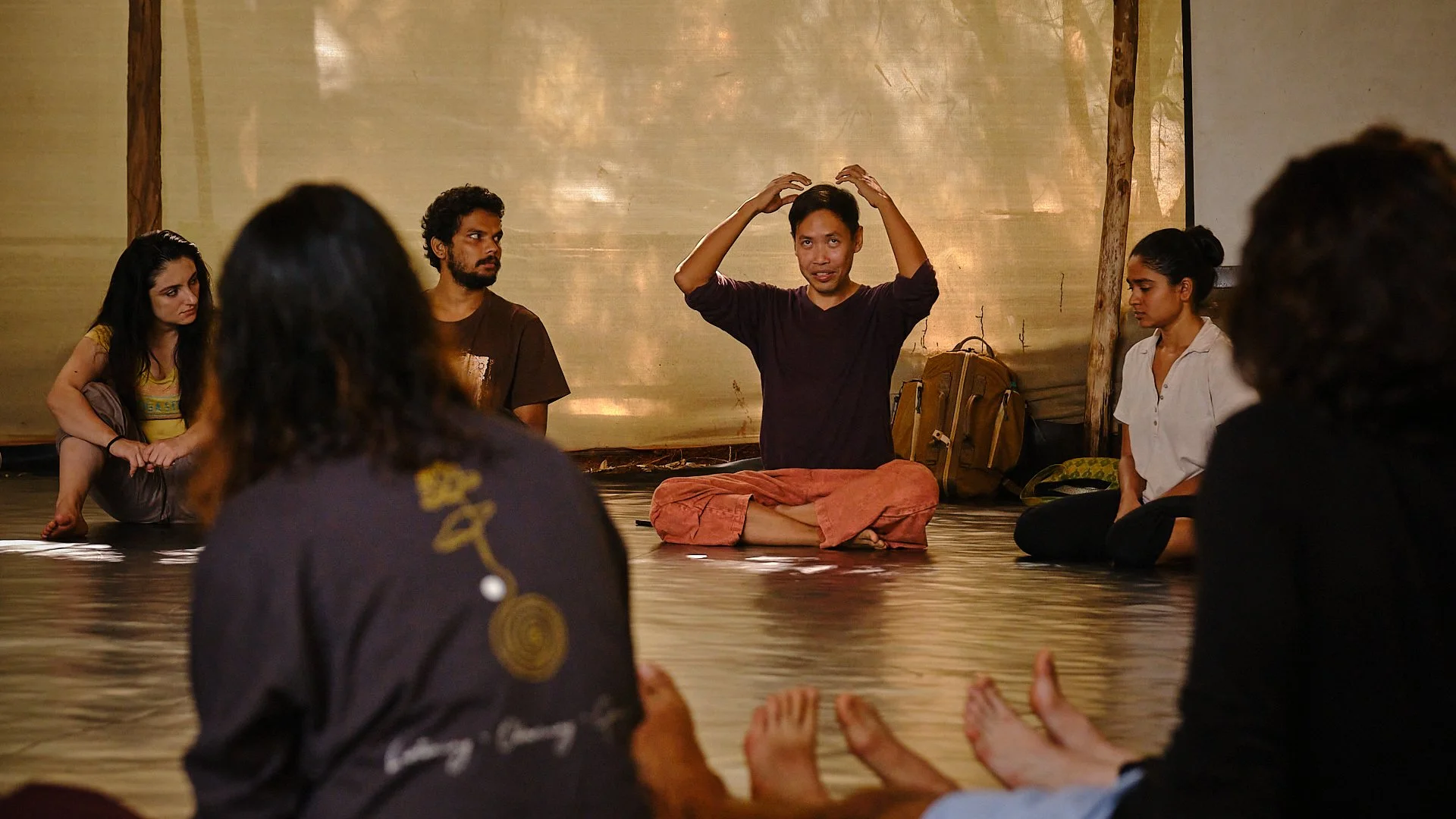
I. The Body as a Relational Site As an artist, movement educator, and curator, my work inhabits the liminal space between body and society, intimacy and resistance. Rooted in Contact Improvisation and somatic research, I explore dance as a relational, political, and poetic act — a mode of inquiry into how bodies connect, communicate, and challenge dominant narratives.
II. Localized Wisdom & Embodied Theory My practice draws from Southeast Asian localized knowledge systems through deep collaborations with queer practitioners, disabled artists, and grassroots educators. I center lived experience as "theory-in-motion" — specifically those shaped by:
Somatic Memory: Navigating trauma and healing.
Sensory Difference: Reclaiming embodied marginality as a creative force.
III. Improvisation as a Philosophical Position I choreograph not for spectacle, but for presence. I cultivate situations where movement becomes a site of:
Unlearning ¦ Care ¦ Emergence Whether in water, on concrete, or in ritual circles, I seek to foster fields where vulnerability and co-agency can arise. My work intersects with Disability Justice, Ecological Attunement, and Decolonial Pedagogy.
IV. 2025–2026 Research: The Quantum Body Informed by my background in Physics, I investigate how foundational concepts such as indeterminacy, superposition, and entanglement can be physically embodied. Through improvisational scores that disrupt linear causality, I explore:
Affective States: Engaging with fear, vulnerability, and shame.
The Posthumanist Inquiry: Navigating the tension between selfhood and selflessness to cultivate a sense of radical interconnectedness.
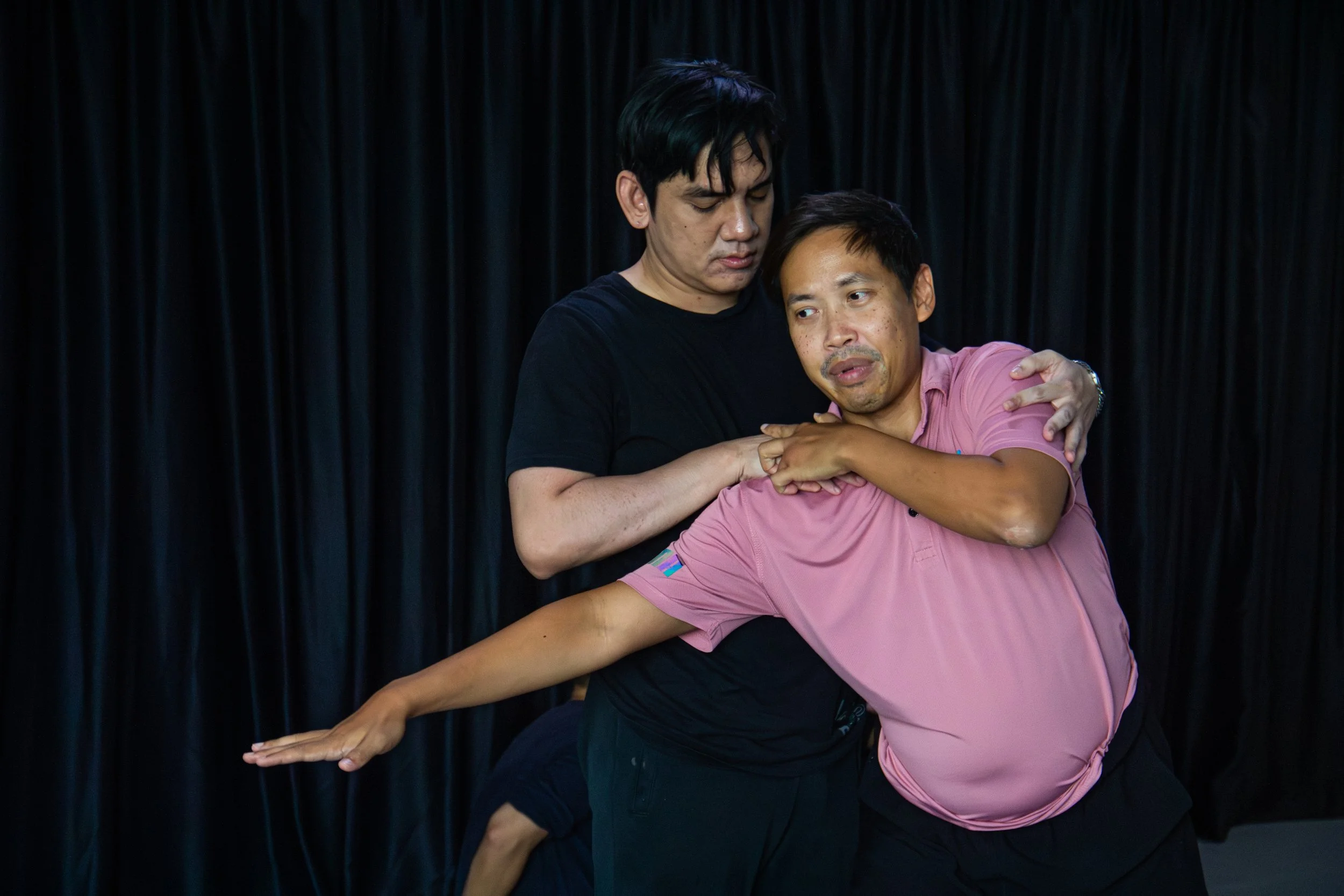
Photography courtesy of Ong